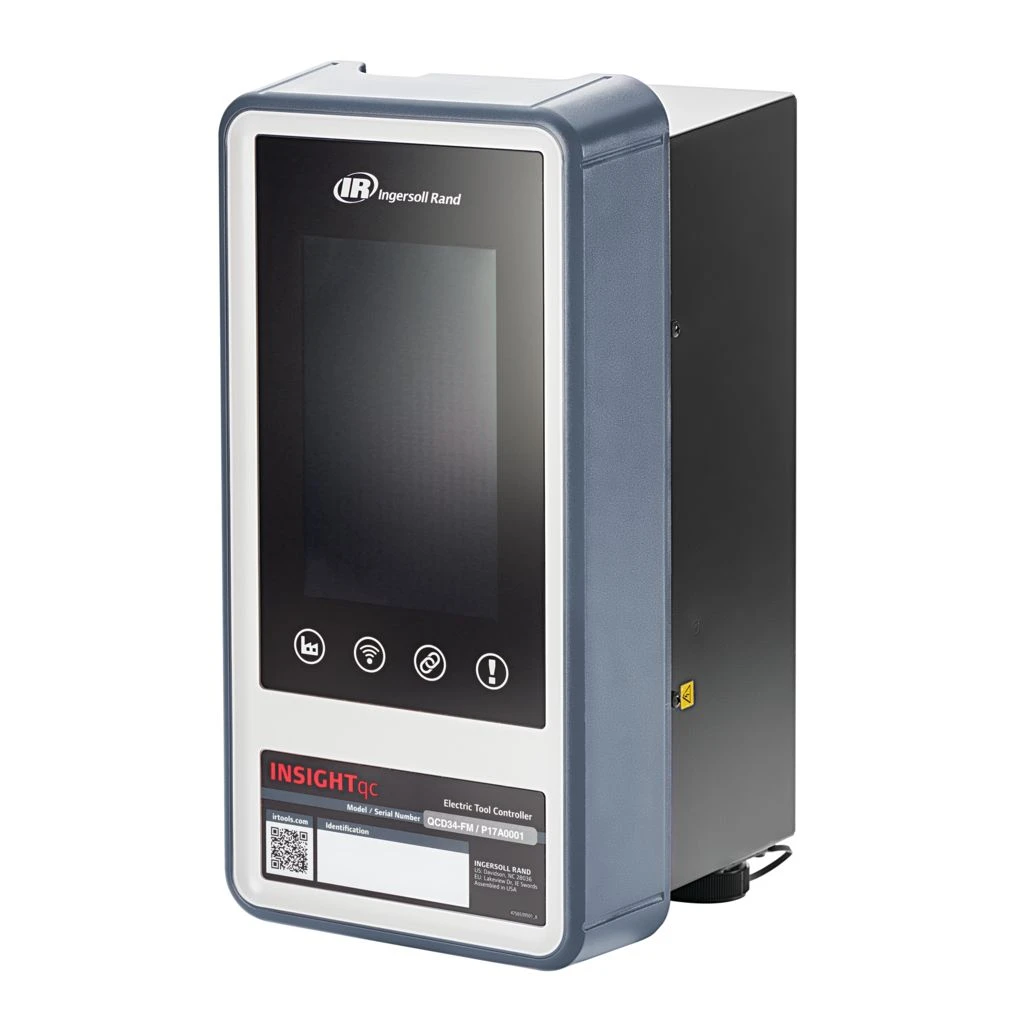
Connected assembly tools and controllers are one part of a whole digital ecosystem. Factories rely on a number of technology suppliers and partners to produce quality product, and assembly networks use programmable logic controller (PLC) platforms to connect and communicate with equipment, machines and tools. To effectively integrate with PLCs, tool controllers should be simple to connect to save time and boost productivity.
Controllers provide valuable information that can improve the assembly process by making it faster, improving product quality, running it more efficiently and saving costs by eliminating rework. These benefits are the reason manufacturers rely on tool controllers, but in doing so, manufacturers face the challenge of merging the new technology with the existing.
A plant-wide system with connected tools and controllers can provide vital information that operators on the line, quality control personnel and plant managers can share in real-time. However, integrating these systems is not without complications. A networked manufacturing facility requires tight communication and coordination between multiple departments, from the operators on the factory floor to the line supervisors, manufacturing engineers and plant control personnel analyzing the data results in the front office.